Documented fact
Torches of Freedom
Date 31 March 1929Actor Edward Bernays, for the American Tobacco CompanySource Bernays’ own published account
Paid by American Tobacco’s George Washington Hill, Bernays staged a group of women smoking Lucky Strikes in New York’s Easter Sunday parade, having taken from the psychoanalyst A. A. Brill the idea of selling the cigarette as a “torch of freedom.” The year before, he had published Propaganda, which argues openly that the deliberate manipulation of public opinion is a legitimate profession and names the techniques. This is not a leaked document. He wrote it down and put his name on it.
What it does not establishThat the stunt alone changed women’s smoking rates — that trend has other causes and the campaign’s measurable effect is argued over. What it settles is intent and method, in the practitioner’s own words.
Bernays, Propaganda (1928), full text
Documented fact
The Business Plot
Date 1933 – 15 February 1935Actor Named financiers; testimony of Maj. Gen. Smedley ButlerSource McCormack–Dickstein Committee, final report
Butler, the most decorated Marine of his era, told a House committee he had been approached to lead a veterans’ march on Washington against Roosevelt. The committee’s final report, submitted on 15 February 1935, found “there is no question that these attempts were discussed, were planned, and might have been placed in execution when and if the financial backers deemed it expedient.” Staff corroborated parts of the account with bank records and correspondence.
What it does not establishThat a coup was imminent or operational. Nobody was prosecuted, the committee declined to act against the men Butler named, and Butler said on the radio two days later that his testimony had been cut where it “got near the top.” What survives is a congressional finding that the discussions were real — which is a smaller and much harder-to-dismiss claim.
Overview, with citations to the committee report
Documented fact
Selling free enterprise
Date 1945–1960Actor National Association of Manufacturers; U.S. Chamber of CommerceSource Elizabeth Fones-Wolf, Selling Free Enterprise (1994)
After 1945, organised business ran a sustained and heavily funded campaign to turn public opinion against New Deal liberalism and organised labour: plant newspapers, films, radio, advertising, community and church programmes, and classroom materials aimed at what the sponsors themselves called the “economic illiteracy” of American students. Fones-Wolf built the account out of the trade associations’ own archives, so the budgets, the targets and the stated aims are theirs, not an interpretation of them.
What it does not establishThat the campaign is why anyone now believes what they believe. It establishes budget, intent, channel and reach. The step from reach to belief is a separate and much harder question, and this record does not take it.
University of Illinois Press
Documented fact
The cultural Cold War
Date 1950–1967Actor CIA, via the Congress for Cultural FreedomSource Ramparts (1967); Frances Stonor Saunders (1999)
The CIA created and covertly funded the Congress for Cultural Freedom, which ran magazines — Encounter among them, launched 1953 — along with conferences, exhibitions and tours across dozens of countries, with money routed through front foundations. It was exposed by Ramparts and the Saturday Evening Post in 1967 and documented at book length by Saunders from the archives.
What it does not establishThat the writers and artists involved were knowing agents. Most were not — that was the design. Funding a platform is not the same as dictating what is said on it, and how much editorial steering actually happened is precisely what the historians still argue about.
Saunders, Who Paid the Piper? (1999)
Documented fact
CIA relationships with journalists
Date 1950s–1970sActor Central Intelligence AgencySource Church Committee final report, Book I (1976); Carl Bernstein, Rolling Stone (1977)
The Senate Select Committee documented the Agency’s paid and unpaid relationships with American journalists and news organisations, the placing of material, and the use of news organisations as cover. Director William Colby testified to the scale of it and to cutting part of it back. Carl Bernstein’s October 1977 article extended the account with named outlets.
What it does not establishThe name. No official investigation used the title “Operation Mockingbird” — that label attached later, largely through Deborah Davis’s Katharine the Great (1979), and it describes practices rather than a file heading. The practices are documented. Anyone citing the codename as though it were stamped on a folder is claiming more than the record carries, and it is the easiest way to get the whole subject dismissed.
U.S. Senate — the Church Committee
Documented fact
COINTELPRO
Date 1956–1971Actor Federal Bureau of InvestigationSource Files taken from the FBI office at Media, Pennsylvania, 8 March 1971; Church Committee, Book III (1976)
The Bureau ran covert programmes to surveil, infiltrate, discredit and break up domestic political organisations. It became public because citizens burgled a field office and mailed the paperwork to the press; the Senate committee then confirmed and considerably extended it. The evidence is the Bureau’s own memoranda.
What it does not establishThat any particular policing decision today descends from it. What it establishes is that the capability and the willingness were institutional rather than individual, and that it took a burglary rather than an audit to surface them.
U.S. Senate — the Church Committee
Documented fact
“Doubt is our product”
Date 1969Actor Brown & Williamson Tobacco CorporationSource Internal memo, UCSF Truth Tobacco Industry Documents
An internal company document states: “Doubt is our product, since it is the best means of competing with the ‘body of fact’ that exists in the mind of the general public. It is also the means of establishing a controversy.” The aim is not to win the argument but to manufacture one. It is in the industry’s own words, in an archive of more than fourteen million pages pried open by litigation.
What it does not establishThat every public controversy is manufactured. It establishes that manufacturing one is a known, written, deliberate technique with a documented price list — which is a fair thing to hold in mind the next time a settled question suddenly has two sides.
UCSF Truth Tobacco Industry Documents
Documented fact
The Powell memorandum
Date 23 August 1971Actor Lewis F. Powell Jr. to the U.S. Chamber of CommerceSource Powell Papers, Washington and Lee University
Two months before he was nominated to the Supreme Court, Powell sent the Chamber of Commerce a confidential memorandum titled “Attack on American Free Enterprise System,” arguing that business was under broad assault and should answer with sustained, funded, coordinated effort in the universities, the media, the courts and politics. It is a strategy document, filed in an archive, under its author’s name, with a date on it.
What it does not establishThat what followed happened because of it. The memo is routinely given more causal weight than any single memo can carry. What it proves is that the strategy was articulated in writing by a named person and sent to an organisation with the means to act on it.
Washington and Lee — the Powell memorandum
Documented fact
The Crisis of Democracy
Date 1975Actor Trilateral Commission; Crozier, Huntington & WatanukiSource New York University Press, 1975
A report to the Trilateral Commission argued that the advanced democracies were becoming ungovernable, and its American section located part of the problem in an “excess of democracy” — too much participation, too little deference to authority. It was published openly, by a university press, under the authors’ names, and it says what it says.
What it does not establishThat it was a plan, or that anyone acted on it. It is evidence of what one transnational elite body was being told by its own commissioned experts, and was content to see in print.
Full report, Internet Archive
Documented fact
The entertainment liaison offices
Date 1947 – presentActor U.S. Department of Defense; CIASource Production assistance agreements and liaison files released under FOIA; Alford & Secker (2017)
The Pentagon runs entertainment liaison offices that lend hardware, locations and personnel to film and television productions on the contractual condition that the department gets the script. Researchers working through FOIA have published tens of thousands of pages of liaison correspondence, including script-change requests, and count assistance to more than 800 feature films and over 1,000 television titles.
What it does not establishThat audiences believe what they are shown, or that every assisted production was changed in substance. It establishes that script approval is the price of access, and that the price is written into the contract rather than implied.
FOIA document library
Documented fact
What Exxon’s own scientists projected
Date Documents 1977–2002; study 2023Actor ExxonMobilSource Supran, Rahmstorf & Oreskes, Science, 12 January 2023
A peer-reviewed analysis of 32 internal ExxonMobil documents and 72 papers by company scientists found that the firm’s own global warming projections were accurate — around 0.20 °C per decade — and at least as skilful as independent academic and government models, over the same years its public communications disputed the science.
What it does not establishAnything about other firms, or intent beyond what the paperwork shows. It is one company, caught in its own filing cabinet. What makes it valuable here is that it is the cleanest available proof that an institution can know one thing and say another, at scale, for decades.
Supran et al., Science (2023)
Inference
Textbook ideology
Date OngoingActor State curricula and corporate-sponsored materialsSource Multiple partial studies; no single primary document
The claim is that school curricula tend to present market arrangements as background conditions rather than as contested choices — the weather rather than a decision. That is an inference assembled from many partial studies of textbooks and standards, and it is labelled as one here because no single document establishes it.
What it does not establishWho, if anyone, intends it. Documented corporate funding of classroom materials (see Selling free enterprise) is adjacency, not proof that today’s curriculum is its descendant. A curriculum can arrive at the same place through inertia, and inertia is the competing explanation that has to be left standing.
Inference
From repeated message to common sense
Date Twentieth century onwardActor Many, uncoordinatedSource The records above, read together
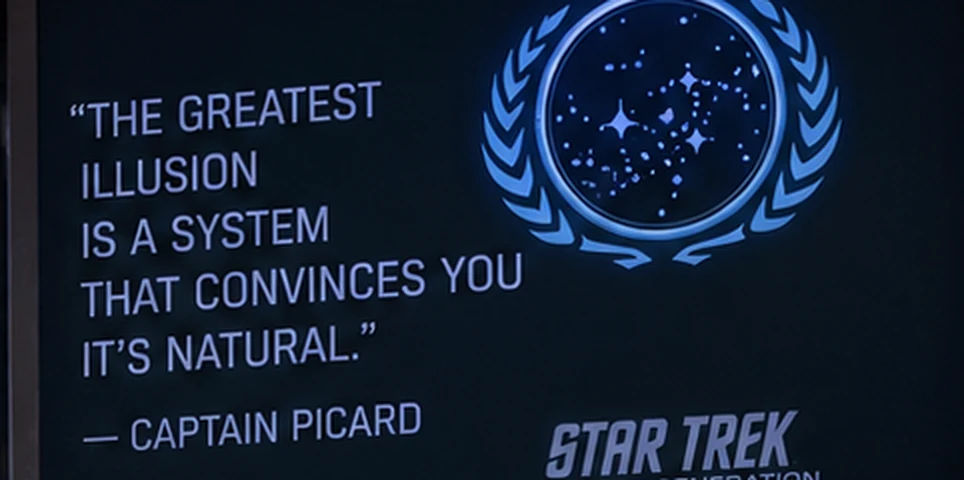
This is the connective layer, and it is reasoning rather than citation. The documented records establish that persuasion at population scale was funded, planned and measured by many separate actors with overlapping interests. The inference is that a belief repeated across school, screen, press and workplace for generations stops registering as a claim at all and starts registering as the way things are.
What it does not establishCentralised authorship. Many actors pushing the same direction for their own reasons produces a result that looks coordinated without anyone coordinating it — and that explanation fits the same evidence, costs less, and has to be carried alongside the other one rather than quietly dropped.
Hypothesis
How much of the tutorial was deliberately scripted?
Date OpenActor UnresolvedSource Not yet built
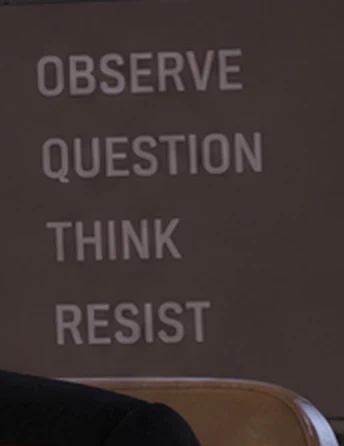
The question the whole piece is pointed at, stated as a question because it has not been answered. Somewhere between “none of it” and “all of it” is a real number, and the records above establish that it is not zero.
What would settle itA documentary chain, not an impression: a funder, a brief, a channel, a measured audience, and a change in belief that is traceable to that channel rather than to everything else happening that decade. Each link exists somewhere in the historical record for some campaigns. Nobody has assembled the whole chain for the belief that capitalism is natural — which is why this card says hypothesis and not fact.
No records in that category.